
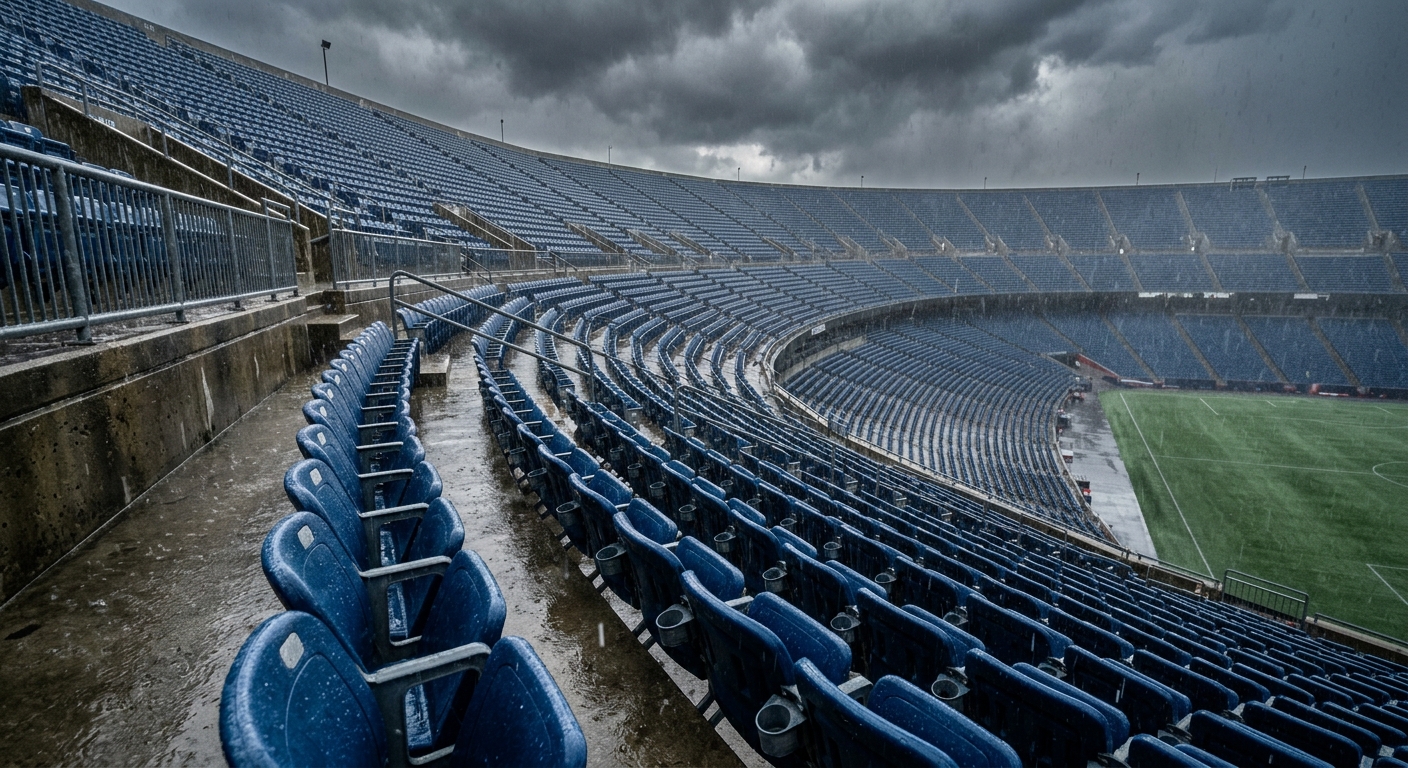
AI-generated illustration; not a photograph of the reported event.
- calendar_today September 25, 2026
Massachusetts music fans expecting to see Ed Sheeran concerts at Foxborough’s Gillette Stadium received disappointing news this week as promoters announced the cancelation of scheduled performances due to severe weather conditions affecting the greater Boston and New England region. The abrupt concert cancellation comes after days of heightened weather alert that threatened both audience and personnel safety at one of the state’s largest entertainment venues.
Weather Forces Cancelation at Gillette Stadium
Organizers, after extensive consultations with regional authorities and weather experts, decided that hazards such as strong winds and flash flooding posed unacceptable risks. As a result, the Ed Sheeran concerts slated for Gillette Stadium have been officially called off. Massachusetts officials and venue staff prioritized the well-being of attendees, following a season that has already witnessed several weather-led disruptions to public events in the region.
Ticket Refunds Automatically Processed
Ticketmaster responded by initiating ticket refunds for all purchase holders. Meanwhile, individuals who acquired tickets through third-party vendors have also been advised on the refund process. The concert cancellation at Gillette Stadium, a venue known for hosting major international acts, has impacted thousands of music enthusiasts across Massachusetts, with hospitality and transportation providers in Foxborough also feeling the effects.
Macklemore Removal Sparks Concert Tour Controversy
The weather-related cancellations coincided with a separate storm brewing within Sheeran’s U.S. tour. Days before the Gillette Stadium shows, the removal of supporting act Macklemore—who publicly voiced palestine support—prompted sharp public debate. Macklemore alleged that Robert Kraft, owner of both the stadium and the New England Patriots, influenced his removal from the setlist, reportedly coordinating with other venue owners to boycott the artist. The incident rapidly became a focal point in ongoing national conversations about freedom of expression and the intersection between musical performance politics and large-scale event operations.
Political Stance and Artistic Solidarity
After Macklemore’s departure, several other opening acts withdrew in solidarity. This unprecedented move among supporting musicians amplified debate over the power that venue owners wield over concert tour controversy and the ability of artists to voice political opinions. Within Massachusetts, these developments have been watched closely by advocacy groups and local artists who regularly perform at Gillette Stadium and similar venues, reflecting broader national anxieties about creative expression in high-profile spaces.
Ed Sheeran Addresses Fallout
Known for previous neutrality, Ed Sheeran addressed the evolving controversy during a recent performance, expressing regret over how tour disputes were affecting personal and professional relationships. While Sheeran did not take a public stance on the issue, he acknowledged a need for dialogue amid mounting tensions fueled by both weather disruptions and disputes surrounding macklemore removal and palestine support.
Macklemore Plans Independent Tour
In response, Macklemore announced plans to spearhead his own tour focused on fundraising for Palestinian aid organizations. The shift not only signals his ongoing commitment to the cause but also spotlights the increasing influence of artists navigating the fine line between personal beliefs and the commercial realities of the music industry. For both fans in Massachusetts and across the U.S., the developments serve as a reminder of how artistic stages are becoming battlegrounds for political debate alongside performances.
Long-Term Impact on Local Concert Scene
The cancelation of Ed Sheeran concerts at Gillette Stadium—and the surrounding controversies—underscore the complexities faced by event organizers, artists, and local stakeholders. As the weather alert system and venue protocols continue to evolve, questions of freedom of expression and the relationship between political stances and commercial event spaces will likely remain at the forefront for Massachusetts audiences and the wider entertainment industry. Meanwhile, the return of major tours will depend not only on favorable conditions but on a shifting dialogue about the boundaries of creative and corporate influence over the region’s music landscape.