
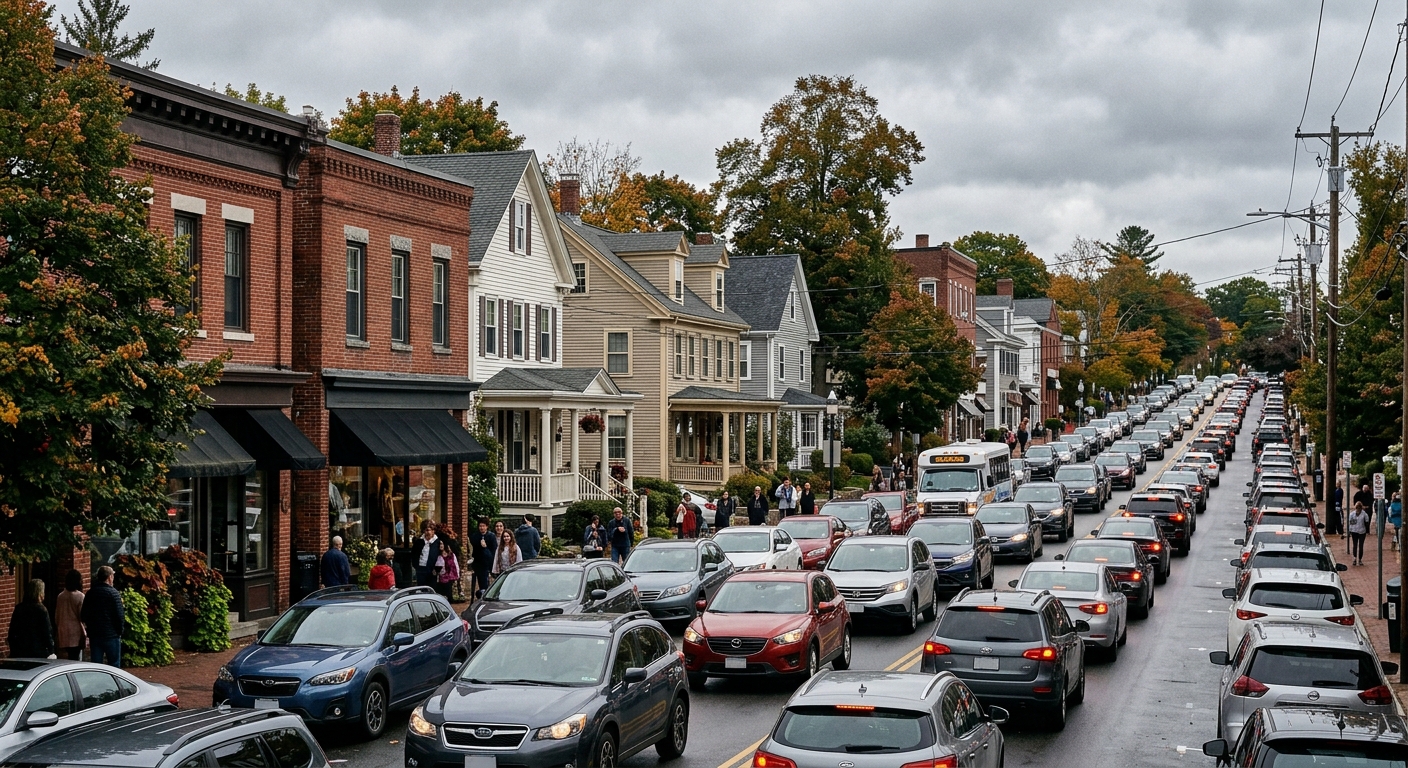
AI-generated illustration; not a photograph of the reported event.
- calendar_today October 13, 2026
A Historical Rejection of the Red Line Extension
In the late 1970s, Arlington, then a predominantly blue-collar suburb, faced a pivotal decision: whether to welcome the MBTA Red Line beneath its streets. The proposed subway extension from Harvard Square to Alewife promised an easy link to Cambridge, Somerville, and Boston. Although federal funding was available and regional leaders touted economic and quality-of-life benefits, Arlington ultimately declined the offer. As a result, the Red Line stopped at Alewife, leaving town residents to rely on existing roadways and bus routes.
Concerns That Stopped the Project
At the time, Arlington’s town leadership supported new stops in Arlington Center and Arlington Heights—but only on the condition that the Red Line continue to Lexington. Their concern was that ending the line within Arlington would cause increased traffic congestion. However, the state could not guarantee funding for a full extension, and many residents were wary of how the new transit infrastructure could transform their community. The town, which in 1970 was over 99 percent white, expressed concerns not just about logistics, but about potential changes to the character of the area.
Local institutions played a key role as well. Arlington’s St. Agnes Parish and its Catholic high school opposed the proposed nearby MBTA parking garage, prompting a 1976 state law banning transit facilities within 75 yards of church property. In a nonbinding 1977 referendum, Arlington voters rejected all proposed Red Line extension routes, including the idea of continuing to Lexington, with the most favored option still losing by over 3,000 votes. The proposal to end the line at Alewife was rejected by more than a 4-to-1 margin, though this is what ultimately occurred.
Evolving Attitudes and Demographics
Arlington has changed significantly since its decision nearly five decades ago. The community has become more diverse, relaxed past restrictions—such as those on alcohol sales—and invested in quality public schools. Many newer residents have roots in nearby urban centers and a greater appreciation for public transit, bike lanes, and walkable neighborhoods. As daily life in Arlington Center became dominated by traffic, some residents began to reconsider the lost promise of a subway connection.
Watching neighboring communities like Somerville benefit from the Green Line extension has also stirred feelings of regret and envy among Arlingtonians. "The town has changed. People changed. Their needs have changed," said Paul Schlichtman, a local school committee and town meeting member who now leads the advocacy group Extend the Red Line.
Renewed Push to Study and Advocate for Transit Expansion
A new campaign to revisit the Red Line extension has emerged. In 2024, Arlington’s legislative delegation succeeded in repealing the 1976 ban on MBTA facilities near Arlington Catholic and secured a $50,000 earmark in the state’s fiscal 2027 budget to study renewed transit options—including the possibility of new subway or bus rapid transit stops. In September 2026, a bill was filed to repeal the 1980 state law that halted extension planning, marking another step toward reconsidering mass transit expansion.
Arlington state representative Sean Garballey expressed strong support, citing constituent demands for improved transportation. "There is a strong belief from my constituents that Arlington deserves better transportation options for them and their neighbors," he said.
Debate Among Residents: Convenience Versus Community Character
The push for an mbta extension is not without controversy. Some longtime and newer residents worry about the potential impacts of greater MBTA access on Arlington’s character. Jake and Lauren Flaherty, who moved from neighborhoods near busier T stations, expressed concerns that extending the Red Line could erode the town’s "quaintness and charm." Others, like Ben Gottesman, see the lack of Red Line stops as a daily inconvenience, especially for those who face time-consuming commutes to Alewife by foot, bike, or bus. "I have to walk, then take a bus, then hop on a train. It’s a lot of steps and it adds so much time," Gottesman said, voicing support for new stops.
Feasibility and Future Prospects
Despite changing opinions, a red line extension remains a distant prospect. The MBTA’s current long-range plans do not include Arlington, and there is little federal funding for major subway projects at this time. Advocates point to relatively straightforward engineering solutions using the existing right-of-way, but acknowledge obstacles such as land procurement, complex intersections, and modern environmental regulations. Paul Schlichtman and others continue to promote the vision, hoping to be ready if future transit funding becomes available. "If people think that it would be a nice thing to have, but it’ll never happen, it’ll never happen. So what I set off to do is let people believe it. This is doable."
Conclusion
As Arlington reconsiders its past decision and weighs the possibility of improved public transit options, the debate reflects broader shifts in attitudes about mobility, community, and regional priorities. Whether the arlington red line project will move forward remains uncertain, but advocates and residents continue to revisit the question: what would Arlington be like with its own subway stops?
Source: boston.com.