
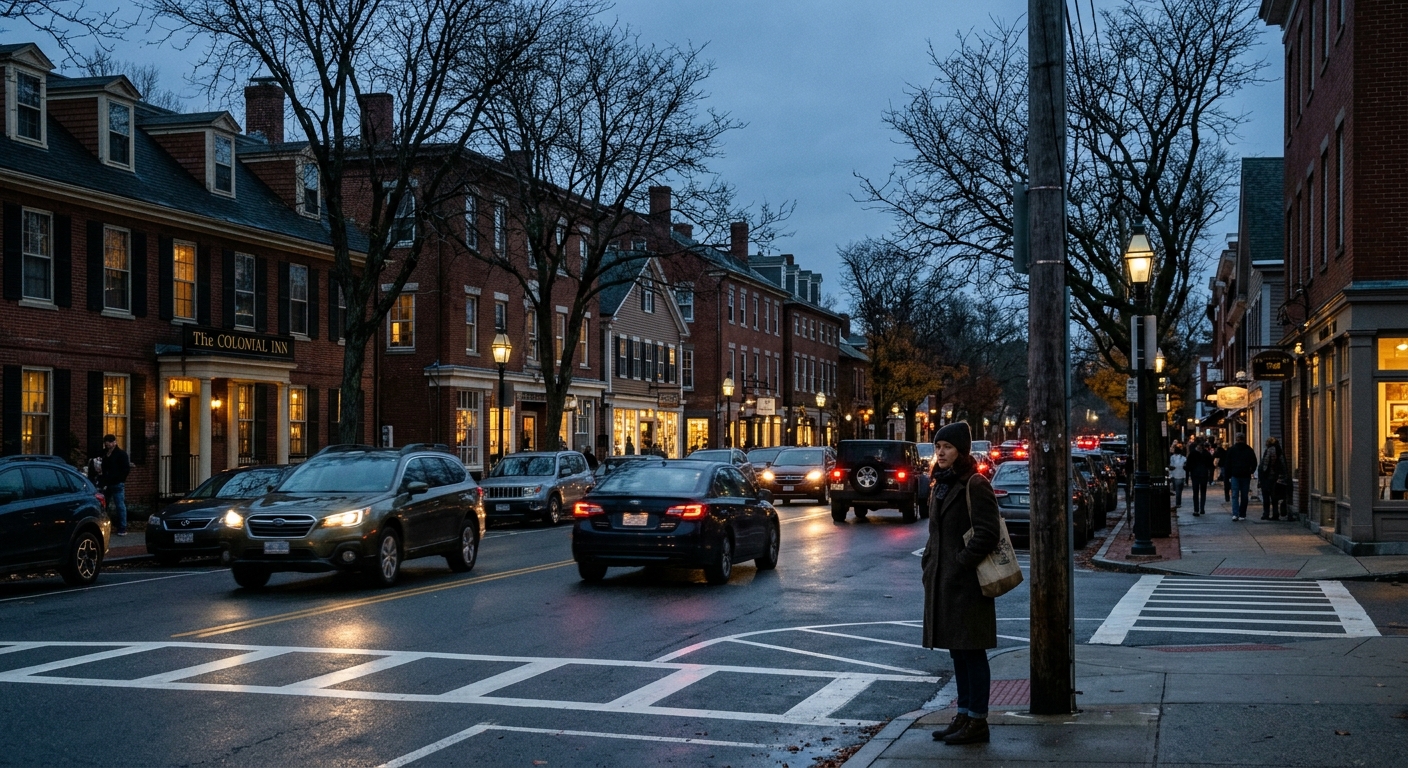
AI-generated illustration; not a photograph of the reported event.
- calendar_today November 2, 2026
Big Rise in Vehicle and Pedestrian Accidents After Fall Clock Change
Recent analysis of crash data from AAA Northeast indicates that the number of pedestrian accidents in Massachusetts more than doubled in November, following the end of daylight saving time. This dramatic rise has been attributed to a combination of earlier evening darkness and sleep disruption affecting driver alertness. The 5 p.m. hour, coinciding with rush hour, saw a notable increase in both vehicle and pedestrian crashes during this period.
Data Shows Spike in November Crashes
According to data from the IMPACT Crash Data Portal, Massachusetts experienced a 30% increase in vehicle crashes during the 5 p.m. hour from October to November 2025. Pedestrian incidents during this hour rose from 15 in October to 32 in November, more than doubling within a single month. The change coincides with the end of daylight saving time, which brings earlier sunsets and reduced visibility during busy commuting periods.
Factors Contributing to Increased Crash Risks
AAA Northeast reports that the switch from daylight saving not only leads to less daylight during commuting hours, but also disrupts drivers' sleep schedules. Research from the AAA Foundation for Traffic Safety highlights that drowsy driving becomes greater risk after the clock change, as drivers may not immediately recognize their own fatigue. In a simulated nighttime driving study, 75% of participants who rated themselves as minimally drowsy were found to be moderately or highly fatigued.
Expert Perspectives on Traffic Safety
Mark Schieldrop, senior spokesperson for AAA Northeast, emphasized the multiple challenges that the seasonal transition creates for drivers. "The end of daylight saving time brings a combination of disrupted sleep schedules and earlier sunsets that can throw drivers off," Schieldrop said. He urged commuters to get enough rest, remain vigilant during darker rush hour periods, and be mindful that all road users are adjusting to the changed conditions.
Marian Berkowitz, founder of the Drowsy Driving Prevention Project, shared her personal connection to the issue, having lost her brother Jim in a crash linked to sleep deprivation following the fall clock change. She warned that even minor disruptions to the sleep cycle can leave drivers more tired than they realize.
Tips for Safer Evening Commutes
To help reduce risk during darker months, AAA recommends the following safety measures:
- Check headlights for clouding or deterioration after three years of use.
- Keep windshields clean and ensure wiper blades are streak-free.
- Increase following distance to at least four seconds behind other vehicles.
- Slow down when turning at intersections, reducing speed by about five mph.
- To avoid glare from oncoming lights, look toward the right edge of your lane.
- Aim for at least 7 hours of sleep before driving and pull over if feeling drowsy.
Importance of Awareness for All Road Users
The significant rise in both vehicle and pedestrian accidents in Massachusetts during November highlights the essential need for increased vigilance and safety practices following the end of daylight saving time. Recognizing the effects of reduced visibility, sleep disruption, and driver fatigue can play a crucial role in preventing future crashes and ensuring safer commutes during the seasonal transition.
Source: wwlp.com.