
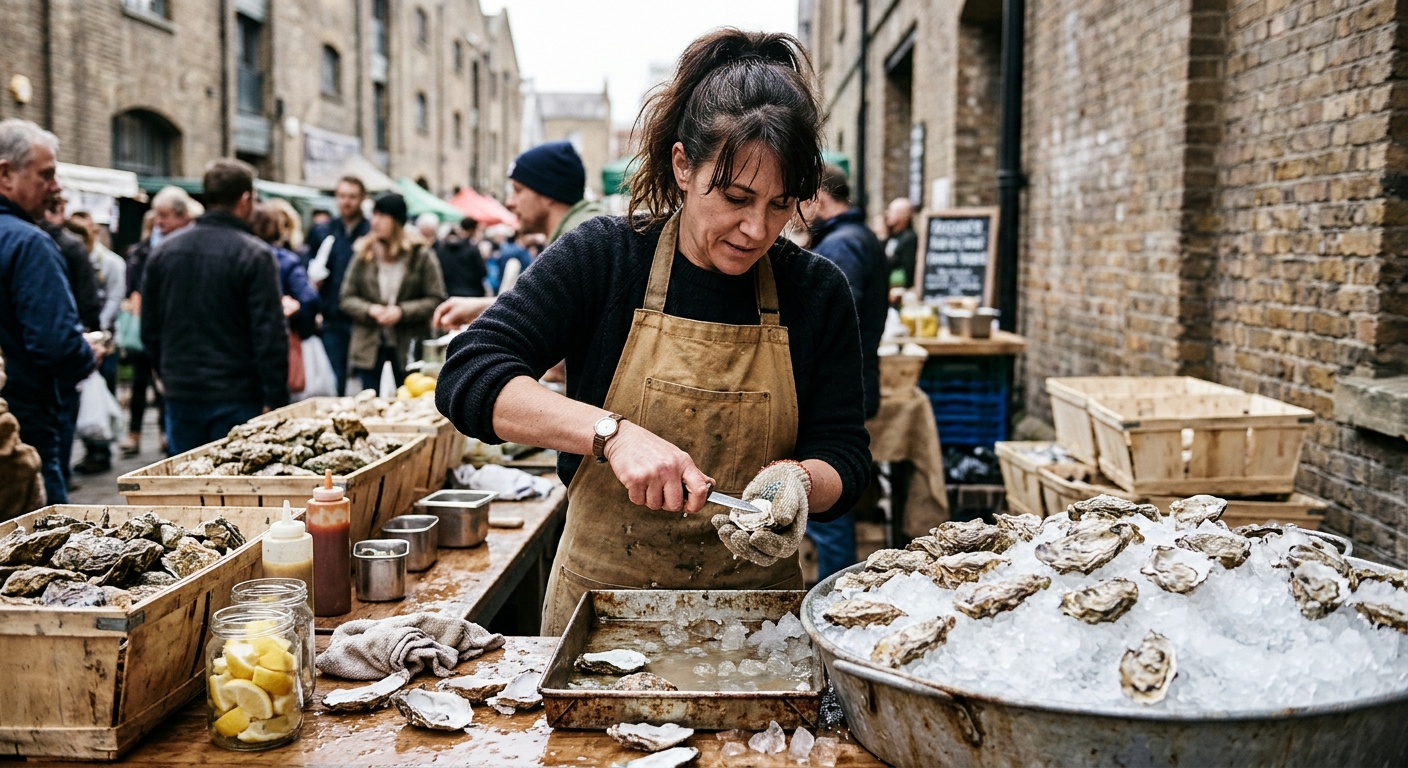
AI-generated illustration; not a photograph of the reported event.
- calendar_today November 9, 2026
November Recognized for Oyster Industry Contributions
Governor Healey has officially declared November as Massachusetts Oyster Month, emphasizing the cultural, economic, and ecological value of shellfish cultivation within the state. The declaration aims to highlight the significant role that oysters and the broader shellfish aquaculture industry play in Massachusetts’ economy and environment.
Celebratory Event at Copley Square Farmers Market
The announcement was marked by a celebration at the Copley Square Farmers Market in Boston. State officials joined aquaculture representatives, oyster farmers, and advocates at the event, which featured live oyster shucking demonstrations and tastings of fresh, locally harvested shellfish. Attendees highlighted the longstanding traditions and economic contributions of shellfish growers in the Commonwealth.
Growth of the Massachusetts Oyster Industry
The oyster industry has emerged as the fastest-growing agricultural sector in Massachusetts. Over the past 15 years, the sector has expanded substantially, establishing oysters as the state’s third most valuable landed species. According to state officials, the number of oyster farmers increased by 33% since 2010, while total oysters sold tripled and revenue quadrupled over the same period.
In the 2025 season, more than 60 million oysters were sold by Massachusetts farmers, generating over $35 million for the state’s blue economy. This represents a 12% increase in landing value over 2024 and a 13% increase from 2023. The state hosts nearly 400 shellfish farms located in 33 coastal communities, with 27 municipalities augmenting wild shellfish resources through ongoing aquaculture activities. Additionally, 372 propagation permit holders produced more than 3 million farmed quahogs in 2025. Aquaculture permits have also been issued for other species, including kelp, horseshoe crabs, and green sea urchins.
State Support for Shellfish Aquaculture
Massachusetts Department of Agricultural Resources (MDAR) Commissioner Ashley Randle attended the event, expressing pride in supporting local oyster growers: “As public demand for fresh, sustainable shellfish continues to grow, we are proud to champion our local growers and ensure Massachusetts seafood remains a premier choice nationwide and around the world.” Department of Fish and Game (DFG) Commissioner Tom O’Shea added, “Across our coast, our oyster growers support countless small businesses, restaurants, and tourism, all while actively boosting marine biodiversity, coastal resilience, and water quality.”
The Division of Marine Fisheries Shellfish Program, part of the DFG, regulates oyster growing areas to ensure public health and safety. Since 2013, a dedicated aquaculture program has overseen licensed municipal sites, enforced safe handling standards, and provided technical assistance to growers. These regulatory efforts have helped facilitate the sector’s expansion while ensuring sustainable practices.
Ongoing Habitat Restoration and Oyster Reef Projects
In addition to regulation and support, state agencies are engaged in habitat restoration initiatives in collaboration with universities, non-profit organizations, and local community groups. These efforts include restoring eelgrass, kelp, artificial reefs, and oyster reefs in coastal waters across Massachusetts. Notable projects include oyster reef restoration in Hamblin Pond in Mashpee and the Westport River in Westport, undertaken with The Nature Conservancy and other partners.
Looking Forward
With official recognition in November, Massachusetts Oyster Month highlights the contributions of the state’s shellfish farmers and aquaculture sector to the blue economy, marine biodiversity, and sustainable food systems. Events, educational programs, and restoration initiatives throughout the month aim to celebrate and support ongoing growth and innovation in the oyster industry.
Source: wwlp.com.