
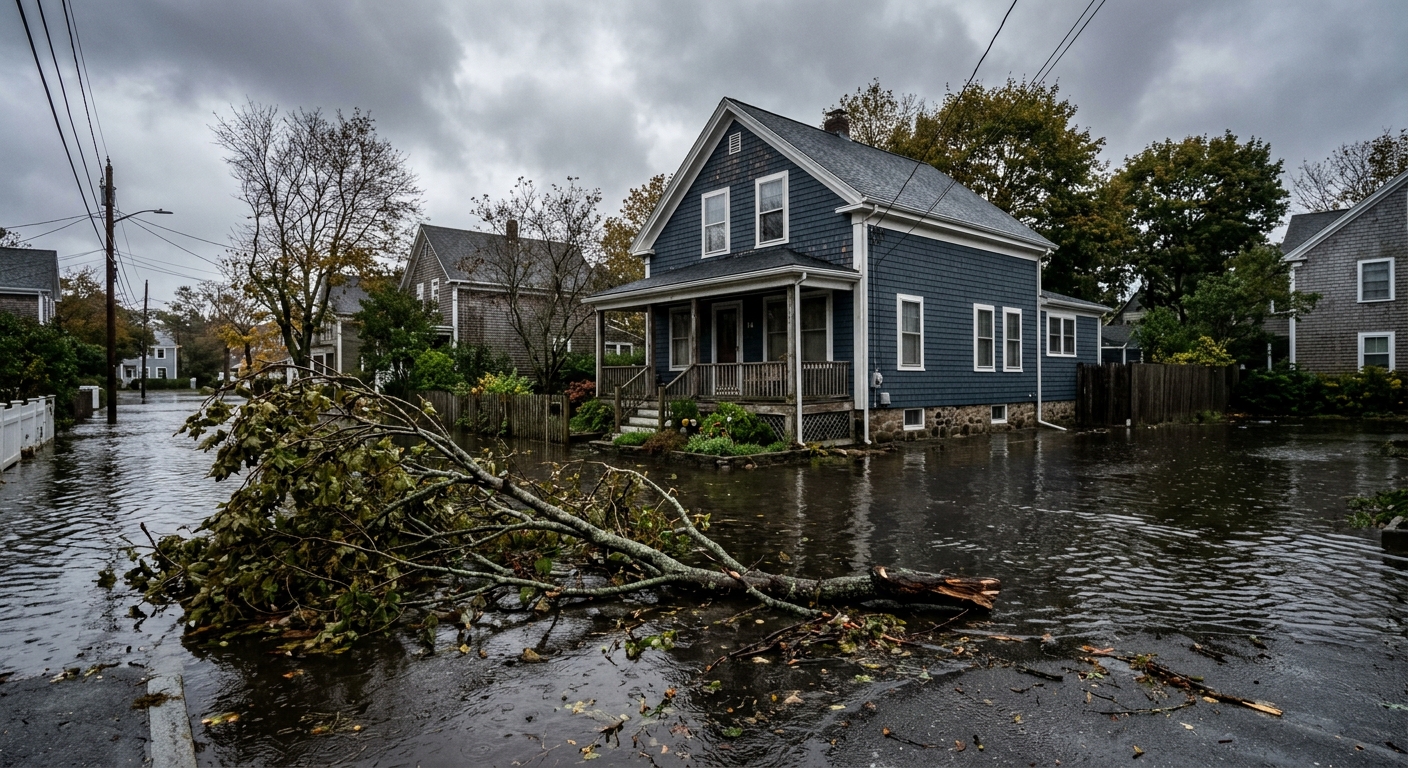
AI-generated illustration; not a photograph of the reported event.
- calendar_today October 10, 2026
Hurricane Isaias Strikes the Southeast
Hurricane Isaias made landfall near Destin, Florida, as a Category 2 hurricane on Friday, causing extensive storm damage, widespread power outages, and at least four deaths across the southeastern United States. The storm brought torrential rain and posed ongoing risks of southeast flooding and tornado threats as it pushed northward over the weekend.
Significant Storm Damage Across Florida and Alabama
As Isaias hit the Florida Panhandle, it peeled off rooftops and damaged hotel façades along the coast. In Pensacola, hurricane-force winds removed the roof of a hotel, and the city's mayor reported damage to the airport. In Panama City Beach, part of a high-rise building's facade was ripped away, while in Destin, a boathouse was flattened. Residents began cleanup efforts amidst scattered debris, with beach chairs and insulation littering parking lots and public spaces.
Storm-Related Fatalities and Emergency Response
The storm was responsible for at least four deaths. In Escambia County, Florida, Sheriff Chip Simmons reported two fatalities: a woman killed by a fallen tree on her home and a man who died from carbon monoxide poisoning after running a generator in his garage. Four family members exposed to the fumes were treated and expected to recover. In Alabama, one person died in Birmingham when a tree fell onto a house; another individual at the residence was rescued and treated. A motor vehicle accident involving a downed tree in Barbour County led to a second storm-related death in Alabama.
Emergency services responded to the incidents, with ongoing efforts focused on recovery and keeping coastal routes clear. Florida Governor Ron DeSantis emphasized that flood risks remain high even after the storm passes, warning residents to stay vigilant for delayed flooding events.
Widespread Power Outages and Ongoing Flood Watches
Nearly 700,000 utility customers were without power by midday Saturday due to downed trees and damaged infrastructure. The U.S. Energy Department authorized up to four million gallons of crude oil from the strategic petroleum reserve to address supply disruptions caused by the storm. The National Hurricane Center issued flood watches for several areas in the Southeast and the southern Appalachians, noting that rainfall totals in Georgia and the Carolinas could reach up to 10 inches, with most locations expecting between 3 and 6 inches. The storm was forecast to move into the Tennessee Valley and the mid-Atlantic region on Sunday.
The threat of tornadoes and further power outages persisted, and local officials continued to urge caution as floodwaters could continue to rise after the storm’s initial passage.
Community Response and Storm Survival
Residents recounted dramatic experiences as the hurricane struck. In Gulf Breeze, Florida, Jayme Mitich and her 13-year-old daughter hid beneath a mattress as their apartment’s roof was torn off, leaving much of their home soaked and damaged by broken beams and insulation. In Gulf Shores, Alabama, Maranie Adams described how the storm rocked her family's elevated home but caused less damage than previous hurricanes, leaving her relieved that her island community was largely spared.
Tropical Storm Activity Beyond Isaias
While Isaias has been the first hurricane to strike the eastern United States since 2024, the Atlantic hurricane season had otherwise been quiet. Meanwhile, in the Pacific, Hurricane Simon intensified to a Category 4 near Mexico’s coast, and Tropical Storm Rachel was expected to bring heavy rain and winds to northern Mexico and southern California over the weekend. Forecasters warned of life-threatening flooding and mudslides in affected Pacific areas.
The ongoing response and recovery efforts highlight the dangers posed by hurricanes and tropical storms, emphasizing the importance of emergency preparedness and prompt public advisories during these severe weather events.
Source: wwlp.com.